U.S. Power Grid Strains Under Record Electricity Demand
U.S. demand for electricity is expected to hit an all-time high both this year and next, driven by the data center buildout of Big Tech. This is the latest in a series of record-demand projections by the Energy Information Administration. There is one problem, though. That problem is the grid.
Electricity consumption in the United States has already had two record-breaking years: 2024 and 2025. The trend is seen extending and possibly accelerating because of the IT industry and its artificial intelligence race, hitting 4,268 billion kWh this year and rising further to 4,391 billion kWh in 2027. But for that to happen smoothly and without blackouts, the grid needs to start getting upgraded.
Reuters’ Gavin Maguire wrote in a recent column how the U.S. grid was built around power plants fueled by coal and gas. It was the organic thing to do, the convenient thing to do in order to get reliable electricity supply every second of every day. But now, despite the pause that Donald Trump hit on wind and solar expansion, there are plenty of such utility-scale installations that cannot always deliver at top levels because of grid constraints such as insufficiently branched-out lines that would deliver the power generated to areas with high demand.
This, by the way, is a major challenge for decarbonization supporters everywhere. With the grid designed to send electricity in the area around the generator, these generators were built strategically to cover all parts of a country. Yet wind and solar installations are built where there is wind and sun, not around electricity demand centers. So, bringing their electricity to those demand centers requires using the line network built for baseload generators.
Speaking of demand, those demand centers look very different today than they did a century ago. Population growth has had its impact on demand, but the biggest driver, by far, is Big Tech and artificial intelligence. A query using ChatGPT uses as much as 10 times the energy that an old-fashioned, so to speak, Google search. Training models such as ChatGPT to perform those queries accurately also requires gargantuan amounts of electricity, equivalent to the consumption of a town—and will only continue growing. Goldman Sachs has projected that global electricity demand from data centers would skyrocket by as much as 165% by 2030, from where it was in 2023.
This is lightning-speed growth in demand. Realistically, there is no way the grid, especially a grid as complex as the U.S. one, can be upgraded in order to ensure the secure and reliable supply of electricity not only to data centers but to all other consumers as well. This is why some regional authorities are mandating tech companies to secure their own generation and why some of those companies are voluntarily opting for bring-your-own-electricity, both alternative and baseload.
The biggest challenge for the grid of tomorrow with all that demand projected, however, is not so much generation as transmission. The links between generators and consumers are what brings the grid to life, but it has also emerged as a constraint because there are too many new demand points but also a lot of new supply points from wind and solar installations.
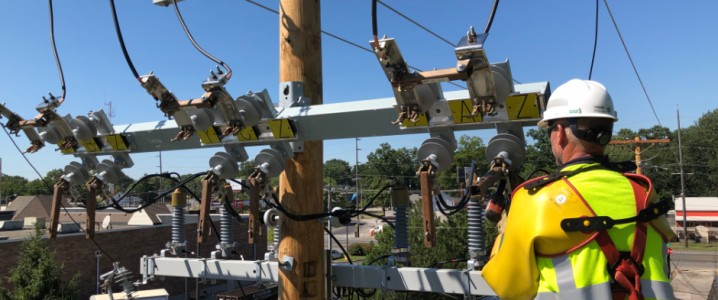
For all these, space needs to be made on the grid, and to make that space, the grid needs more “links”, that is, transmission lines. Add to this the transformer shortage that has emerged as an adverse result of the fast growth in demand and alternative electricity supply, and those projects about electricity demand become questionable—because there simply might not be enough electricity to cover that demand.
This post appeared first on https://oilprice.com